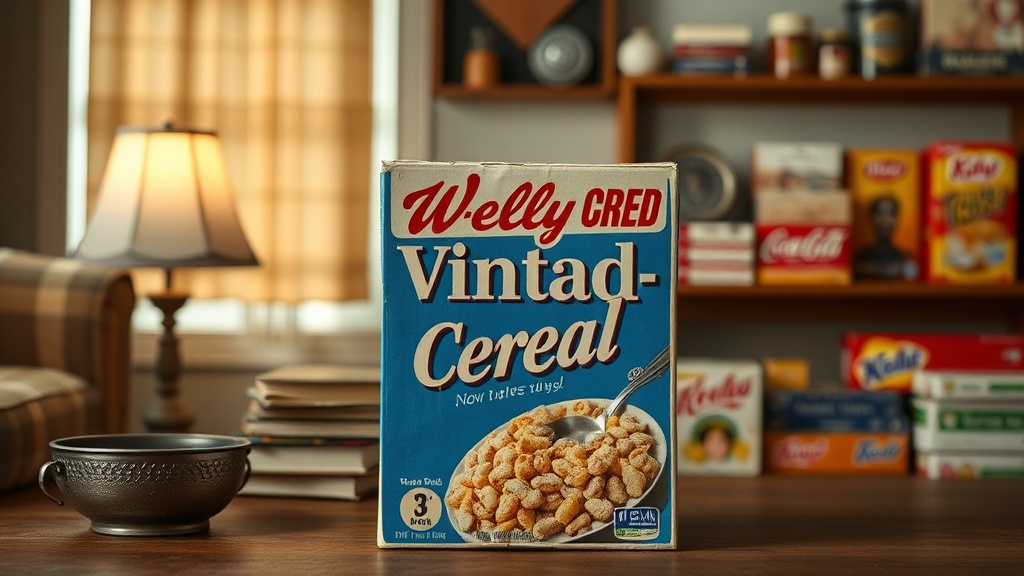
How to Flatten and Preserve Vintage Cereal Boxes Like a Pro

Vintage cereal boxes occupy a unique space in paper collectibles. They're oversized, printed with vibrant graphics, and surprisingly fragile. This guide walks through the complete process of safely flattening cereal boxes for storage while preserving their condition and value. Whether you're dealing with a single 1980s Ghostbusters box or building a warehouse archive of advertising memorabilia, these techniques protect your investment.
Should You Flatten Vintage Cereal Boxes or Keep Them Assembled?
Flattening is the right choice for long-term storage of most cereal boxes. The folded construction of these containers creates stress points at the corners and seams that worsen over time when boxes sit empty.
That said, not every box benefits from flattening. Boxes with significant existing damage—torn glue seams, deteriorating cardboard, or brittle paper—may not survive the process. Here's how to decide:
- Flatten: Boxes in good structural condition, common varieties you own in quantity, items destined for flat-file storage
- Keep assembled: Rare prototypes, boxes with original cereal contents (sealed), items with extensive 3D premiums attached inside
The catch? Once flattened, some boxes never regain their original shape if you change your mind. Document assembled boxes with photographs before flattening—future you will appreciate the reference.
What Tools and Materials Do You Need to Flatten Cereal Boxes Safely?
Professional-grade flattening requires minimal investment. Most collectors already own the core supplies; the rest run under $30 at archival suppliers.
| Tool/Material | Purpose | Recommended Product |
|---|---|---|
| Microspatula | Separating glued seams without tearing | Bone folder or stainless steel spatula from Gaylord Archival |
| Cotton gloves | Preventing oil transfer to paper surfaces | Nitrile-coated cotton from University Products |
| Weights | Holding boxes flat during drying | Glass blocks or archival book weights |
| Misting bottle | Relaxing stubborn glue (when necessary) | Any clean mist sprayer—never soak |
| Acid-free tissue | Interleaving between flattened boxes | Unbuffered tissue for color prints |
| Storage portfolio | Long-term flat storage | Print folders from Light Impressions |
Avoid household irons for heat-flattening. The direct heat risks scorching and can activate old adhesives in unpredictable ways. Room-temperature flattening takes longer but preserves the paper fibers.
How Do You Actually Flatten a Cereal Box Without Damaging It?
The technique varies by box construction—most vintage cereal boxes use either glued seams (pre-1970s) or interlocking tabs (1970s onward). Here's the workflow for both types:
Glued Seam Boxes (Pre-1970s)
These require the most patience. The original wheat paste adhesives harden over decades into brittle crusts.
- Lay the empty box on a clean work surface with the glued seam facing up.
- Slide a microspatula under the seam edge, working slowly from one end. Never force it—if the spatula meets resistance, pause.
- For stubborn sections, hold a barely-damp cotton swab (distilled water) against the glue for 30 seconds to reactivate it. Don't oversaturate.
- Once the seam releases, gently unfold the box along its natural creases. The paperboard should bend at the original fold lines without cracking.
- Lay the flattened box face-down on clean blotting paper. Cover with another sheet, then weight evenly across the surface.
Worth noting: Some early cereal boxes used hide glue that responds poorly to moisture. Test an inconspicuous corner first—a dab of water should soften the glue slightly if it's the right type.
Interlocking Tab Boxes (1970s-Present)
These are generally easier to flatten, though the tabs can tear if handled roughly.
- Examine the bottom closure first. Most boxes have a tucked tab design—gently pull the outer tab away from the box body.
- Work around the bottom perimeter, releasing each tab in sequence. Some designs require pushing an inner tab out first.
- Once the bottom opens, reach inside and push the top seam tabs outward. The box should now open like a sleeve.
- Cut any interior promotional bands or premiums attached to the box walls (document these first with photos).
- Flatten along existing creases and weight immediately—tab boxes tend to re-expand if left unweighted.
What's the Best Way to Store Flattened Cereal Boxes?
Storage makes or breaks preservation. Even perfectly flattened boxes deteriorate in poor conditions.
Environmental controls matter. Paper-based collectibles thrive at 65°F and 35% relative humidity—basement and attic storage kills them slowly. If climate control isn't possible, silica gel packets (replaced quarterly) provide minimal protection.
Vertical filing versus horizontal stacking: For collections under 100 boxes, vertical storage in archival print boxes (like those from Hollinger Metal Edge) allows browsing without handling. Larger collections work better in flat files—the kind map collectors use—with each box interleaved in acid-free tissue.
Never use standard cardboard boxes for long-term storage. The lignin in everyday cardboard off-gasses acids that yellow paper over time. Similarly, PVC sleeves (the shiny, stiff plastic) trap moisture and create microclimates perfect for mold.
Here's the thing about polyethylene bags: they're safe for paper but create static that can lift printing inks on older boxes. If you bag, choose uncoated polyethylene (not PVC) and don't seal them airtight.
Organizing Your Collection
Develop a cataloging system before flattening dozens of boxes. Consider:
- By date: Chronological organization works for historical research
- By brand/manufacturer: Useful for tracking corporate design evolution (General Mills, Kellogg's, Post)
- By theme: Sports promotions, movie tie-ins, character premiums
Whatever system you choose, photograph each box before flattening and assign an inventory number. Write the number lightly in pencil on the back of the flattened box—never use pen or adhesive labels.
How Do You Handle Special Cases and Problem Boxes?
Not every box cooperates. Some situations require modified approaches—or professional intervention.
Wax-coated boxes: Popular from the 1950s through early 1970s, these resist flattening because the wax coating prevents the paperboard from bending cleanly. Work them slowly in a warm room (not hot), bending repeatedly along the same line until the wax relaxes. Never use a hair dryer—the heat melts wax into the paper fibers.
Window boxes: Cereal boxes with acetate windows (showing the prize inside) present a dilemma. The acetate becomes brittle and often cracks during flattening. Some collectors choose to cut the window section out entirely, storing it separately. Others leave the box assembled to preserve the window integrity.
Autographed boxes: Signatures in marker or ballpoint pen are vulnerable to smearing during the flattening process. Fixatives help—Krylon Workable Fixatif sprayed lightly across the signature area—but test on a similar surface first. When in doubt, consult a paper conservator.
The reality? Some boxes aren't worth the risk. A pristine 1950s Frosted Flakes box in assembled condition might justify professional conservation costs. A common 1990s Cheerios box with torn corners doesn't.
Common Mistakes That Ruin Vintage Cereal Boxes
Experience teaches painful lessons. Learn from collectors who've already made these errors:
- Rushing the glue release: Tearing a glued seam creates irreparable damage. Work in 15-minute sessions if needed.
- Over-moistening: Water stains expand outward from contact points and never fully disappear. Use a brush, not a spray bottle, for precise application.
- Improper weighting: Uneven weights create permanent creases. Distribute weight across the entire surface area.
- Sunlight exposure during flattening: UV fading happens faster than you'd think. Work away from windows.
- Stacking too high: More than 12 inches of stacked flattened boxes compresses the bottom layers. Use multiple shallow containers instead.
Professional conservators at institutions like the Library of Congress Preservation Directorate recommend handling paper artifacts minimally—gloves on, food and drinks banished, clean flat workspace. These aren't paranoid precautions; they're cost-effective insurance.
"The box that survived sixty years in someone's attic can be destroyed in sixty seconds of careless handling. Respect the object's age."
Flattening and preserving vintage cereal boxes isn't complicated—it's methodical. The collectors who build serious collections aren't necessarily the ones with the biggest budgets. They're the ones who treat every box like the fragile artifact it is, who document their work, and who invest in proper materials rather than cutting corners. Your collection deserves that level of care.
Steps
- 1
Prepare Your Workspace and Gather Archival Supplies
- 2
Carefully Open Seams and Flatten the Box
- 3
Store in Archival Sleeves or Display Frames