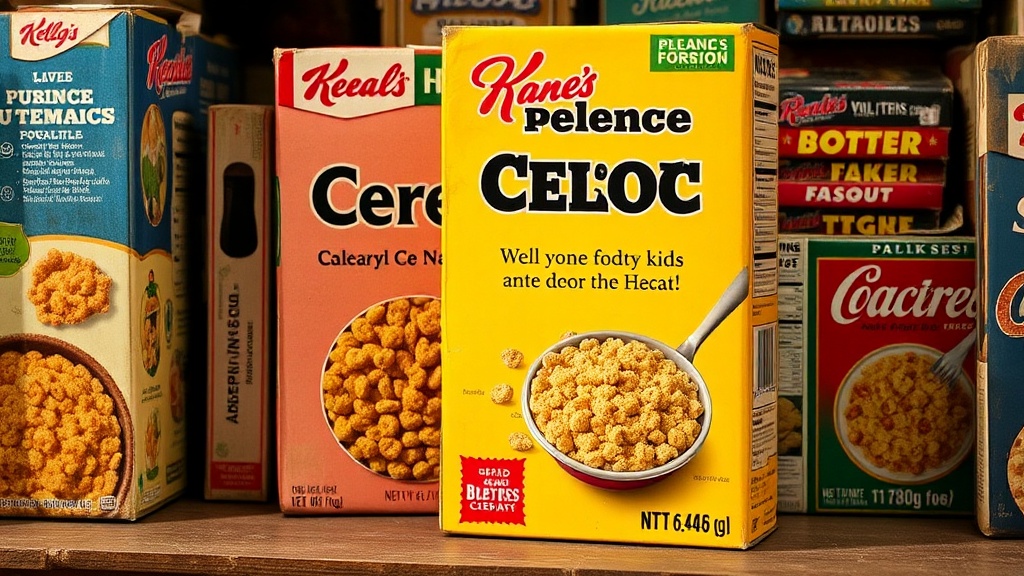
How to Preserve Vintage Cereal Boxes: A Complete Guide for Collectors

This guide covers the complete preservation workflow for vintage cereal boxes—from stabilization and cleaning to storage and display. Whether you've just acquired a 1950s Kellogg's Sugar Smacks box or a complete set of 1980s General Mills monster cereals, proper handling techniques protect your investment and keep those paper collectibles looking sharp for decades.
What's the Best Way to Store Vintage Cereal Boxes Long-Term?
The best storage method depends on the box's condition, rarity, and your available space. For most collectors, archival-grade materials combined with climate control offer the safest approach. Acid-free containers, stable humidity, and protection from light are non-negotiable for serious preservation.
Let's break down the core storage options. Each has trade-offs between cost, accessibility, and protection level.
| Storage Method | Best For | Cost Range | Pros | Cons |
|---|---|---|---|---|
| Archival polyester sleeves (Mylar D) | High-value singles, display prep | $15-30 for 50 | Crystal clear, inert, acid-free | Can trap moisture if box isn't dry |
| Acid-free document boxes | Collection storage, stackability | $8-15 per box | Protects from light, stacks well | Less accessible for viewing |
| Flat file cabinets (Safco, Bisley) | Large collections, serious collectors | $300-800 | Horizontal storage prevents warping | Expensive, space-intensive |
| Polypropylene comic bins | Budget-friendly bulk storage | $10-20 each | Cheap, widely available | Not archival; replace every 5-10 years |
Here's the thing about humidity—it's the silent killer. Paper fibers expand and contract with moisture fluctuations. Over time, this weakens the cardboard and causes warping that can't be reversed. Aim for 35-45% relative humidity. If you live in a coastal area or the humid Southeast, a dehumidifier (like the hOmeLabs 4,500 Sq. Ft. model) isn't optional—it's required equipment.
How Do You Clean a Vintage Cereal Box Without Damaging It?
You don't. Not really. Aggressive cleaning damages vintage paperboard more often than it helps. Surface dust removal and gentle stabilization are the only safe interventions for most boxes.
Start with a soft goat hair brush (like those from University Products) or a clean makeup brush with natural bristles. Work from the center outward in light strokes. This lifts loose particles without grinding them into the paper fibers.
For stuck-on grime, the approach changes based on severity:
- Light soiling: Dry cleaning sponge (Absorene or similar) lifted gently across the surface—never rub in circles
- Grease spots: Leave them alone; any solvent risks spreading the oil and creating a larger stain
- Pencil marks: Plastic eraser (Mars Plastic by Staedtler) with light, one-directional strokes
- Adhesive residue: Consult a professional conservator—home remedies destroy more boxes than they save
The catch? Boxes with existing damage need stabilization before any cleaning happens. Torn corners, separated seams, and lifting graphics require archival repair materials. Wheat starch paste (from suppliers like Talas) and Japanese kozo paper work for structural repairs. Don't reach for Scotch tape—ever. The adhesive yellows, the tape becomes brittle, and removal later causes more damage than the original problem.
Worth noting: cereal boxes from the 1970s and earlier often used clay-coated paperboard. This surface is less forgiving than modern cardstock. Any moisture—including from "gentle" cleaning—can lift the coating and ruin the printed graphics permanently.
Should You Flatten Cereal Boxes or Keep Them Assembled?
Keep them assembled whenever possible. Flattening introduces crease stress along existing fold lines and can crack aged paperboard. The exception? Boxes already flattened in their history—those should stay flat to avoid re-creasing.
Preserving a three-dimensional object presents challenges. Empty boxes collapse under their own weight if not supported. The solution: archival-quality box inserts or custom-formed acid-free board that maintains interior structure without pressure points.
For display purposes, some collectors use museum wax (QuakeHold! Putty works well) to secure boxes on shelves without adhesives. Others build custom acrylic cases— pricey, but they offer 360-degree protection from dust, light, and curious hands. Gaylord Archival carries pre-made acrylic cases in standard sizes, though custom builds from local plastics shops often cost less for odd dimensions.
That said, flat storage has advantages for space efficiency. If you must flatten (and again, avoid this unless necessary), here's the proper technique:
- Document the box with photos before any handling
- Support the bottom panel with a rigid board while opening seams
- Don't force any glued areas—cut carefully with a micro spatula if separation is needed
- Store flat between sheets of acid-free tissue, weight evenly distributed
- Never stack more than 10-15 boxes horizontally without additional support boards
What Causes Cereal Boxes to Deteriorate—and How Do You Prevent It?
Light, humidity, acidity, and handling cause nearly all deterioration in paper collectibles. Understanding each threat helps prioritize your preservation efforts and budget.
Light damage is cumulative and irreversible. UV rays break down lignin in paper fibers, causing yellowing and embrittlement. Even indirect daylight accelerates this process. Fluorescent bulbs emit UV too—though at lower levels. The solution isn't complicated: store boxes in darkness when not viewing them. For display, use UV-filtering acrylic (Plexiglas UF-3 or equivalent) and LED lighting with minimal UV output. Limit display time to a few months per year, rotating pieces in and out of dark storage.
Acidity comes from two sources—the original materials and the environment. Cheap cardboard from the 1960s-80s was often high in lignin, which naturally acidifies over time. This causes brittleness and that distinctive "old paper" smell (actually aldehydes and acids off-gassing). Archival storage materials buffer this acidity. Some collectors use MicroChamber paper or activated carbon sheets in storage boxes to absorb pollutants and slow acid migration.
Insect damage—specifically silverfish and booklice—threatens any paper collection. These pests thrive in humid environments and feed on cellulose, starch-based adhesives, and sizing materials. Prevention beats treatment every time. Cedar blocks don't work (that's a myth). Instead, maintain low humidity and inspect stored boxes quarterly. Freezing can kill existing infestations: seal boxes in plastic, freeze at 0°F for 72 hours, then slowly return to room temperature before unsealing.
Grading and Documentation
Before storing anything, document the condition. The cereal box collecting community uses a modified version of comic book grading standards:
- Mint (MT 9.8-10): As manufactured, no flaws visible to the naked eye
- Near Mint (NM 9.0-9.6): Minor imperfections, sharp corners, vibrant colors
- Very Fine (VF 7.5-8.5): Minor wear, slight corner softening, minor printing defects
- Fine (FN 6.0-7.0): Moderate wear, some color fading, minor tears or stains
- Very Good (VG 4.0-5.0): Significant wear, creasing, staining, but complete and presentable
- Good (G 2.0-3.0): Heavy wear, major creases, tears, tape, writing
- Poor (P 0.5-1.5): Major pieces missing, structural integrity compromised
Photograph each box from multiple angles. Record manufacturer, year, product name, and any notable features (toy premiums, box variations, promotional markings). This documentation serves insurance purposes and helps track condition changes over time. Several collectors use the Collectr app or simple spreadsheet systems—find what works and stay consistent.
Insurance and Appraisal Considerations
Standard homeowner's policies rarely cover collectibles adequately. A 1955 Kellogg's Frosted Flakes box in near-mint condition can command $500-800. Complete sets of 1980s monster cereals? $2,000-4,000 depending on condition. Document everything with photos, receipts, and third-party appraisals for high-value pieces.
Professional appraisers certified by the American Society of Appraisers or similar organizations provide documentation that insurance companies accept. For less valuable items, price guides from Trading Card Database (which tracks cereal premiums and packaging) and eBay sold listings offer reasonable benchmarks. Update valuations every 2-3 years—this market moves faster than most anticipate.
Reed Diallo has been collecting and writing about cereal box ephemera since 2014. When not hunting down 1970s Cap'n Crunch variants at estate sales across the five boroughs, he moderates the Cereal Box Collectors community forum and occasionally contributes to Collectible Paper magazine.
Steps
- 1
Clean and Inspect Your Cereal Boxes
- 2
Choose the Right Protective Storage Materials
- 3
Display or Store in a Climate-Controlled Environment