How to Properly Store and Preserve Vintage Cereal Boxes

What Makes Vintage Cereal Boxes Worth Preserving?
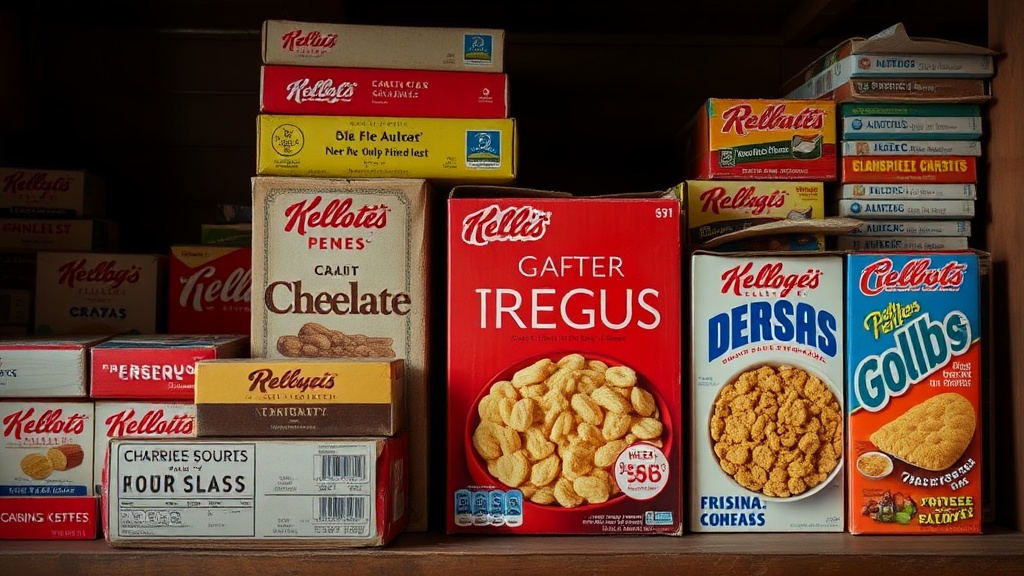
Vintage cereal boxes represent more than nostalgic packaging—they're fragile paper artifacts that document advertising history, pop culture milestones, and graphic design evolution. The cardboard stock, vibrant inks, and glued seams deteriorate rapidly without proper care. Humidity warps. Light fades. Acids migrate. A mint-condition 1950s Wheaties box can lose 70% of its value with a single water stain or corner crease. This guide covers everything from basic storage materials to climate control strategies that keep cereal box collections in display-worthy condition for decades.
What's the Best Way to Store Cereal Boxes Long-Term?
Archival-quality materials and stable environmental conditions form the foundation of proper cereal box preservation.
The paperboard used in vintage cereal packaging (typically 18-24 point clay-coated newsback) remains chemically active. That means acids continue breaking down fibers decades after production. Direct contact with standard cardboard, PVC plastics, or wood drawers accelerates yellowing and embrittlement.
Here's what actually works:
- Archival polypropylene sleeves — Crystal-clear, inert plastic (look for "archival safe" or "PVC-free" labels). BCW Supplies makes 8x10 and 11x14 sizes that fit most standard cereal boxes flat.
- Acid-free backing boards — Museum-grade 4-ply or 8-ply mat board (pH 7.5-8.5) provides rigidity and buffers against acidity.
- Archival storage boxes — Drop-front design from Gaylord Archival or Hollinger Metal Edge. Avoid recycled cardboard—it's loaded with lignin that off-gasses.
- Interleaving tissue — Unbuffered acid-free tissue for colored inks; buffered (calcium carbonate) for plain brown cardboard interiors.
The catch? Don't overhandle. Every time a box comes out for "just a quick look," fingers deposit oils and flex stress points. Store boxes so they're visible without removal—sleeves let you examine both sides through plastic.
How Do Temperature and Humidity Affect Cereal Box Condition?
Relative humidity between 30-50% and temperatures below 70°F dramatically extend the lifespan of paper-based collectibles.
Paper absorbs moisture from the air. Too humid (above 60% RH), and cardboard swells, glue joints weaken, and mold becomes a real threat. Too dry (below 20% RH), and paper becomes brittle—folds crack, corners snap. Temperature accelerates chemical reactions; every 10°F increase roughly doubles deterioration rates.
Worth noting: basements and attics are terrible choices. Brooklyn brownstone basements hit 80% humidity in summer. Attic temperatures swing 40°F daily. Climate stability matters more than hitting perfect numbers.
For serious collections, consider these options:
| Storage Location | Pros | Cons |
|---|---|---|
| Interior closet (living space) | Stable temp, low cost | Limited climate control, light exposure risk |
| Wine cooler (converted) | Precise temp/RH, compact | Expensive, limited capacity |
| Safe deposit box | Maximum security, stable | Very small, access limited, no humidity control |
| Professional art storage | Optimal conditions, insurance | High cost, off-site access |
Most collectors start with an interior closet and a Sensirion-based hygrometer. The SensorPush HT.w ($50) sends phone alerts when humidity drifts—cheap insurance against seasonal swings.
Should You Flatten Cereal Boxes or Store Them Assembled?
Unassembled (flattened) storage reduces stress on glue seams and allows tighter packing, but assembly preservation matters for display value and certain rare variants.
Here's the thing: every cereal box has weak points. The bottom glue strip. The top closure tabs. The side seam where front and back panels meet. An assembled box bears its own weight—gravity pulls the base outward, stressing decades-old adhesive. Flattened boxes eliminate that load.
That said, some collectors pay premiums for "built" boxes. Certain promotional issues (1970s Monster Cereals with glow-in-the-dark ink, 1980s Nintendo Cereal System) display better upright. The solution? Support assembled boxes with archival-quality interior forms.
Options for assembled box support:
- Custom-cut archival foam — Ethafoam or Volara inserts shaped to interior dimensions. Expensive but reversible.
- Acid-free tissue stuffing — Loosely crumpled unbuffered tissue supports walls without abrasion.
- Replica boxes — Some collectors build identical-size reproductions from modern cardstock to bear structural load, preserving originals flat behind.
Never use newspaper, regular tissue, or bubble wrap directly against vintage surfaces. Newsprint transfers ink and acid. Bubble wrap traps moisture and can stick to deteriorating coatings.
Handling Assembled Boxes
Two hands. Always. Support the base fully—don't grab by the top flap. Vintage glue fails without warning. A 1960s Post Sugar Crisp with Woody Woodpecker graphics looks sturdy but the bottom may detach in one motion. Slide assembled boxes from shelves rather than lifting by edges.
How Do You Protect Cereal Boxes from Light Damage?
Ultraviolet and visible light fade inks and degrade paper fibers—protecting against both requires physical barriers and light source management.
Those vibrant 1970s day-glo oranges and 1980s neon yellows? Fugitive dyes. They disappear faster than you think. Direct sunlight can produce noticeable fading in 6-12 months. Even incandescent and LED bulbs emit damaging wavelengths.
Practical protection strategies:
- UV-filtering acrylic or glass — Tru Vue Optium Museum Acrylic blocks 99% UV while eliminating glare. Expensive but worth it for displayed pieces.
- Light rotation — Display different boxes quarterly, storing others in darkness. No box stays illuminated year-round.
- Distance matters — Inverse square law applies. A box 4 feet from a window receives 1/16th the light intensity of one at 1 foot.
- LED only — If displaying under artificial light, use 2700K warm-white LEDs with no UV component. Avoid halogen track lighting entirely.
Light damage is cumulative and irreversible. A box stored in pitch darkness for 50 years emerges pristine. The same box under constant display lighting—even "museum" levels—shows degradation in a decade.
What About Pests and Environmental Hazards?
Insects, rodents, and airborne pollutants pose serious threats to paper collections—and standard pest control often causes more damage than prevention.
Silverfish love starch-based adhesives. Carpet beetles munch protein-based sizing in paper. Mice shred cardboard for nesting material. Traditional mothballs (naphthalene, paradichlorobenzene) off-gas chemicals that permanently stain and embrittle paper. Don't use them.
Safer approaches:
Preventive storage — Sealed archival boxes stop most insects. For extra protection, Cedar Fresh cedar blocks (natural, no oils) placed in the closet—not inside boxes—repel some pests without chemical residue.
Freezing protocol — Suspected insect infestation? Seal boxes in ziplock bags, freeze at 0°F for 72 hours, thaw 24 hours still sealed (prevents condensation), repeat cycle once. Kills all life stages without chemicals.
Air quality — Urban environments (hello, Brooklyn) introduce ozone, sulfur dioxide, and particulates. Activated carbon filters in storage areas help. So does avoiding storage near fresh paint, new carpet, or cleaning supplies—all off-gas volatile compounds that accelerate paper aging.
Display Options That Don't Destroy Value
Collectors want to see their boxes—hoarding them in darkness defeats the purpose. The challenge is showing them off without sacrificing condition.
Wall-mounted solutions work when executed properly:
Shadow boxes with spacers — Deep frames (2-3 inches) with acid-free matboard spacers keep boxes from touching glass. Spacers allow air circulation and prevent condensation transfer. Frame Destination and American Frame sell conservation-grade deep frames.
Acrylic display cubes — Custom-fitted cases from Clear Solutions or similar archival suppliers. Fully enclosed, UV-filtering, dust-free. Cost runs $30-80 per box depending on size.
Rotating tabletop stands — For assembled boxes, acrylic easels with a lip support the base while keeping the box accessible. Position away from windows and HVAC vents.
The bottom line? Every display choice involves trade-offs between visibility and preservation. The collectors who maintain mint collections over decades accept inconvenience—sleeves, boxes, limited light exposure—as the price of ownership. A faded, foxed, warped cereal box tells the same story as a pristine one. It just tells it for thousands of dollars less at resale.
Steps
- 1
Choose archival-quality storage materials
- 2
Control temperature and humidity levels
- 3
Organize and catalog your collection