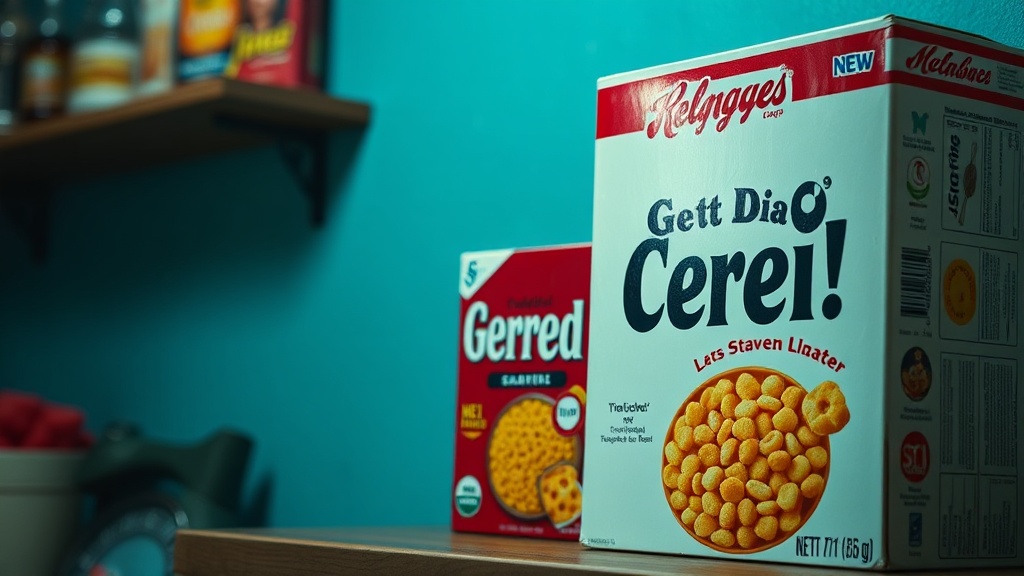
How to Store and Display Vintage Cereal Boxes Without Damage

This post covers practical, field-tested methods for storing and displaying vintage cereal boxes so they stay crisp, bright, and intact for years to come. If you've spent time (and money) tracking down rare boxes from the 1970s or 1980s, you already know that cardboard and ink don't age gracefully without some intervention. One wrong shelf, a humid summer, or a few hours of direct sun can turn a mint-condition box into a faded, sagging casualty. Whether you're sitting on five boxes or five hundred, the same rules apply. Here's how to avoid the most common mistakes and build a setup that actually protects your investment.
What's the Best Way to Protect Vintage Cereal Boxes from Sunlight and Humidity?
Keep them out of direct light and store them in a climate-controlled space with stable humidity between 30% and 50%. Sunlight is the single biggest enemy of vintage printed materials. UV rays break down inks and bleach cardboard faster than most collectors realize. Even indirect daylight through a window can cause noticeable fading over six months. (Think of it like leaving a newspaper on a dashboard—same science, slower timeline.) Fluorescent bulbs aren't innocent either; they emit low-level UV that adds up over years of continuous exposure.
The ideal storage room is an interior closet or basement area that stays relatively dry year-round. Basements can be tricky, though. If the space smells musty or feels damp, it's too humid. You'll want a dehumidifier running consistently—something like the hOmeLabs 1,500 Sq. Ft. Energy Star Dehumidifier works well for small to medium collection rooms. Aim for that 30–50% relative humidity sweet spot. Too dry, and the cardboard becomes brittle and prone to cracking along the edges. Too wet, and you risk mold, foxing, and glue failure that can separate flaps from the main body of the box.
Temperature matters too. The Library of Congress preservation guidelines recommend cool, stable environments for paper-based collections. Try to keep the room between 65°F and 70°F. Avoid attics, garages, and anywhere near a radiator or HVAC vent. Swings in temperature cause cardboard to expand and contract, which stresses corners and seams. In Brooklyn, where summer heat waves can push apartments into the 90s, a small window air conditioner or even a closet fan can make the difference between a stable collection and a season of regret.
Do You Need to Seal Vintage Cereal Boxes in Plastic?
No, you don't need to seal them—but you should slip them into acid-free sleeves or archival bags if you want real protection. Standard Ziploc bags from the grocery store are a bad idea. They trap moisture, off-gas chemicals, and can stick to vintage ink over time. What you want are polyethylene or polypropylene sleeves rated as acid-free and lignin-free. Lignin is a natural compound in wood pulp that breaks down into acids as it ages, so anything touching your box should be certified lignin-free.
BCW Supplies makes crystal-clear sleeves in multiple sizes that fit standard cereal boxes without being too tight. For extra peace of mind, some collectors double-bag—one sleeve around the box, then a second around a rigid backing board. That said, never vacuum-seal a cereal box. The pressure can crush corners, and if any moisture is trapped inside, you'll create a petri dish instead of a preservation case. Heat-sealing is equally risky; the wrong temperature can melt the plastic onto the cardboard or cause thermal damage to the ink.
Here's the thing: the box needs to breathe a little. Archival-quality plastic provides a barrier against dust, fingerprints, and airborne pollutants while still allowing minimal air exchange. If you're storing boxes long-term in a box or bin, line the container with unprinted newsprint or acid-free tissue. Don't use regular newspaper—the ink will transfer, and the paper itself is highly acidic. For collectors who want to go a step further, Archival Methods and Lineco both sell buffered tissue paper that neutralizes acids over time. It's the same material used by museums for textile and paper storage.
How Do You Display a Cereal Box Collection Without Damaging It?
Use UV-filtering acrylic cases, stable shelving with proper support, and keep boxes away from heat sources and windows. Displaying a collection is half the fun. After all, a box for Cap'n Crunch's PB Crunch deserves to be seen. The trick is doing it without trading condition for aesthetics. A beautiful display that fades your boxes in two years is a net loss.
For open shelving, the IKEA BILLY bookcase is a popular starting point—affordable, widely available, and deep enough for most standard cereal boxes. The catch? The shelves aren't always perfectly level, and the finish can off-gas slightly when new. Let the unit air out for a week before loading it with vintage cardboard. For a step up, look at Gaylord Archival steel shelving or Metro wire racks with solid shelf liners. Both offer better weight distribution and won't warp under a full load of 1970s Kellogg's over time.
Acrylic display cases are worth the investment for high-value boxes. Companies like Comic Concept and Collector's Resource make UV-resistant acrylic cases sized specifically for cereal boxes. They're not cheap—expect to pay $15 to $30 per case—but they stop dust, block light, and deter casual handling. For wall mounting, use shadow boxes with UV-protective glass (not regular picture-frame glass) and mount the box using archival photo corners or a shallow acrylic ledge. Never use tape, glue, or sticky putty directly on the box. The adhesive residue can sink into the cardboard and become impossible to remove without tearing the surface layer.
If you live in a small Brooklyn apartment—like Reed Diallo does—you might not have floor space for rows of bookcases. Floating shelves from West Elm or CB2 can turn a narrow hallway into a gallery. Just keep them out of the kitchen. Cooking grease and humidity from boiling pots will find their way onto every surface, leaving a faint, sticky film that attracts dust and dulls colors. LED strip lighting is a nice touch for display shelves, but stick to warm-white LEDs (2700K to 3000K) with low UV output. Avoid halogen spotlights entirely; they throw heat and light damage in equal measure.
Supply Comparison: What Works Best?
| Storage Method | Best For | Cost Estimate | Drawbacks |
|---|---|---|---|
| Acid-free poly sleeves (BCW) | General long-term storage | $0.50–$1.50 per box | Minimal impact protection |
| UV acrylic display cases | High-value or featured pieces | $15–$30 per box | Bulky; expensive for large collections |
| IKEA BILLY bookcase | Budget-friendly open display | ~$80 per unit | No UV or dust protection |
| Archival storage boxes (Gaylord) | Closet or basement storage | $10–$25 per box | Boxes are hidden from view |
| Shadow boxes with UV glass | Wall display of single prized boxes | $30–$60 each | Time-consuming to mount properly |
How Should You Handle and Clean Old Cereal Boxes?
Wash and dry your hands thoroughly before touching any vintage box, and use a soft horsehair brush or a bulb air blower for light dusting. Oils from skin transfer easily to old cardboard and can leave permanent stains. Some collectors wear cotton gloves. Others—Reed Diallo included—find gloves too clumsy and prefer freshly washed, completely dry bare hands. Either approach works as long as you're consistent and never reach for a box after eating chips or applying lotion.
Never use water, cleaning sprays, or wet wipes on a cereal box. If there's surface dirt, a gentle sweep with a Winsor & Newton Series 7 watercolor brush (size 6 or larger) or a Giotto rocket air blower usually does the job. For stubborn debris lodged in corners, a soft cosmetic brush works well. Avoid anything with stiff bristles or plastic fibers that might scratch the printed surface. If a box has a price sticker from a defunct grocery chain like Grand Union or A&P, resist the urge to peel it. The adhesive has usually dried into the cardboard, and removal almost always tears the top layer of ink.
Worth noting: if a box smells like the cereal it once held, that's not necessarily a problem. Old cardboard often retains faint odors. What you want to watch for is mold, mildew, or the sharp smell of rodent activity. If you detect any of those, isolate the box immediately. The Smithsonian Museum Conservation Institute recommends freezing infested paper items in sealed polyethylene bags for 72 hours to kill insect larvae, followed by careful brushing. For mold, professional conservation is usually the safest route. Home remedies like vinegar or bleach sprays will destroy the paper fibers and any remaining value.
Another detail collectors overlook: weight distribution. Never stack more than two or three cereal boxes directly on top of each other unless they're identical sizes and all in pristine condition. Uneven weight crushes corners. If you must stack, place a sheet of acid-free board between each layer. Better yet, store them upright like books on a shelf, supported on both sides so they don't lean. Leaning causes torque stress along the spine and base—two of the most vulnerable areas. For extra stability, some collectors use QuakeHold! museum gel or small acrylic bookends to keep boxes standing straight without direct contact with metal or rubber that might off-gas.
One final thought on insurance and documentation. If your collection includes rare promotional boxes (think Star Wars Cheerios or Michael Jordan Wheaties), photograph each piece in good lighting and keep a digital inventory with dimensions, condition notes, and purchase dates. For high-end collections, a rider on your homeowner's or renter's insurance policy from a company like Collectibles Insurance Services can cover damage from fire, theft, or water. Peace of mind costs less than you might think—especially when a single graded box can sell for more than a month's rent in New York City.
Your vintage cereal boxes have already survived decades of attics, basements, and pantry shelves. With the right setup—a stable climate, archival sleeves, smart shelving, and clean hands—they'll survive decades more. And they'll look good doing it.