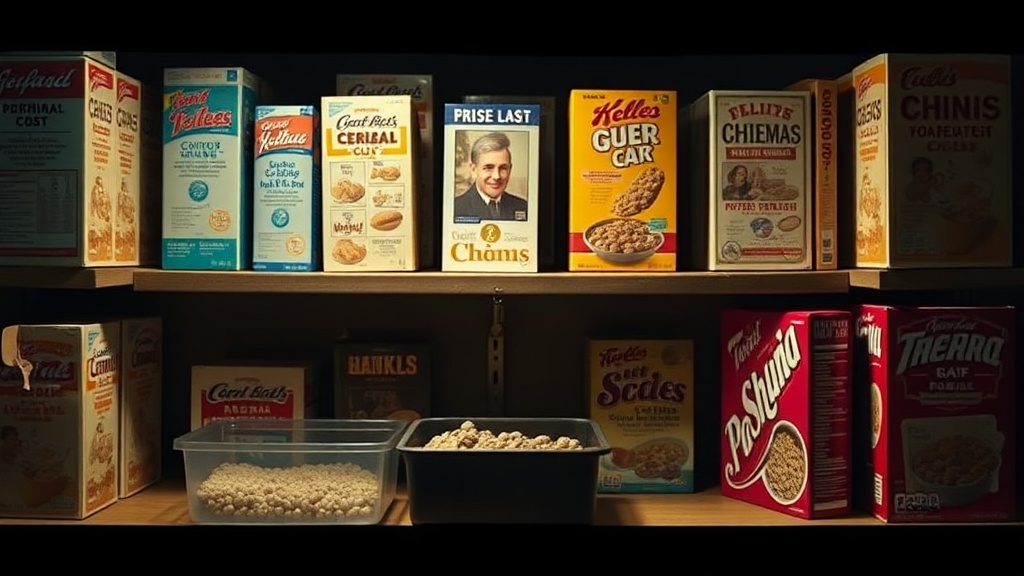
How to Store Cereal Boxes: A Complete Preservation Guide

Cereal boxes represent a unique intersection of advertising art, pop culture history, and childhood nostalgia. Unlike coins or action figures, these paperboard treasures face constant threats from humidity, light exposure, and acid migration that can fade vibrant graphics and compromise structural integrity within months. This guide covers everything needed to preserve a cereal box collection for decades—from climate control basics and archival materials to display strategies that balance protection with enjoyment.
What's the Best Way to Store Vintage Cereal Boxes?
The optimal storage method combines climate-controlled environments, acid-free materials, and protective enclosures that shield boxes from dust, light, and physical pressure. Think of it as creating a microclimate where paperboard can rest without stress.
Flat storage remains the gold standard for long-term preservation. Laying boxes horizontally distributes weight evenly across the entire surface, preventing the stress fractures and corner crushing that plague vertically shelved collections. For truly rare specimens—say, a 1975 Monster Cereals production sample or an unopened Cap'n Crunch variant—individual archival boxes provide the best protection.
Vertical shelving works acceptably for common boxes in heavy rotation, provided they're supported snugly between bookends or archival dividers. The key is eliminating lean. Even a few degrees of tilt creates pressure points that warp paperboard over time. The Society of American Archivists recommends storing paper materials at 60-70°F with relative humidity between 30-50%—conditions that prevent mold growth while maintaining dimensional stability.
For collectors working with limited space, Bankers Boxes and similar corrugated cardboard containers can work temporarily. The catch? Standard cardboard off-gasses acids that yellow paper over time. Line these temporary homes with archival tissue or polyethylene foam board as a barrier. Better yet, invest in Gaylord Archival record storage cartons or Hollinger Metal Edge document cases—purpose-built for preservation.
How Do You Protect Cereal Boxes From Humidity and Light Damage?
Humidity and light represent the twin destroyers of paper collectibles. Moisture weakens paperboard fibers, promotes mold growth, and activates acidic compounds in the cardboard itself. Light—particularly ultraviolet wavelengths—breaks down inks and bleaches vibrant graphics into ghostly shadows of their former glory.
Basements and attics make terrible storage locations despite their convenience. Temperature fluctuations in these spaces create condensation cycles that accelerate deterioration. That charming 1980s Smurf Berry Crunch box? Six months in a damp basement transforms crisp edges into soft, wavy nightmares. Instead, choose interior closets or rooms with consistent year-round temperatures.
Desiccant packets help control moisture in enclosed storage systems. Silica gel—the same stuff found in electronics packaging—absorbs ambient humidity effectively. For serious collections, Eva-Dry renewable mini-dehumidifiers offer rechargeable moisture control without the waste of disposable packets. Check them monthly during humid summers.
Light protection requires more than keeping boxes away from windows. Fluorescent bulbs and LED lights emit enough UV to cause gradual fading. Store boxes in opaque containers or wrap displayed pieces in Mylar (biaxially-oriented polyethylene terephthalate) sleeves rated for UV protection. BCW Supplies and Ultra Pro manufacture crystal-clear Mylar bags specifically sized for cereal boxes—typically measuring around 8" x 11" x 2.5" for standard vintage specimens.
UV-Blocking Solutions Comparison
| Method | Protection Level | Cost | Best For |
|---|---|---|---|
| Standard Mylar bag (3 mil) | Basic dust/scratch protection | $0.50-$1.00 each | Common boxes in dark storage |
| UV-protective Mylar (5 mil) | Blocks 99% UV radiation | $1.50-$2.50 each | Displayed pieces near windows |
| Acrylic display case with UV filtering | Maximum protection | $15-$40 each | High-value specimens |
| Blackout storage boxes | Complete light elimination | $8-$15 each | Long-term archival storage |
What Storage Materials Are Safe for Paperboard Collectibles?
Not all "archival" products deserve the label. True archival materials meet ISO 18916 standards for photographic enclosures—or the equivalent ANSI/NISO Z39.48 specification for library materials. Look for terms like "acid-free," "lignin-free," and "buffered" when selecting supplies.
Unbuffered materials work best for cereal boxes. Buffered storage (containing calcium carbonate) neutralizes acids but can react poorly with certain dyes and inks—particularly the fluorescent colors common in 1980s and 90s cereal packaging. When in doubt, choose unbuffered tissue and boards. University Products and Gaylord Archival clearly label their buffered versus unbuffered offerings.
Avoid PVC (polyvinyl chloride) like the plague. That distinctive plastic smell emanating from cheap sleeves? That's off-gassing—chemical degradation that creates hydrochloric acid as a byproduct. Within months, PVC destroys paper and leaves irreversible staining. Polyethylene, polypropylene, and polyester (Mylar/Diafoil) represent safe alternatives. The Northeast Document Conservation Center maintains excellent resources for identifying compatible storage materials.
Here's the thing about tissue paper: standard gift wrap tissue contains lignin and acids that migrate into adjacent materials. Only use unbuffered, archival-grade tissue when wrapping boxes or filling voids in storage containers. Lineco and Archival Methods produce reliable acid-free tissue in convenient sheet sizes.
Materials to Avoid
- Rubber bands (they melt into paper and leave permanent stains)
- Standard cardboard (acidic, causes yellowing)
- Newspaper or newsprint (extremely acidic, transfers ink)
- PVC sleeves or bags (creates permanent chemical damage)
- Masking tape or Scotch tape (adhesive failure and staining)
- Direct contact with wood shelves (off-gasses acids)
Should You Display Cereal Boxes or Keep Them Stored?
Most collectors want to enjoy their treasures, not bury them in archival darkness. Displaying cereal boxes is absolutely possible—with proper precautions. The goal becomes minimizing exposure time and intensity rather than eliminating display entirely.
Rotation represents the collector's best friend. Keep the bulk of the collection in proper storage, rotating displayed pieces every 3-6 months. This limits cumulative light damage while keeping the display fresh and interesting. Think of it as curating a mini-exhibition that changes with the seasons.
When displaying, position boxes away from direct sunlight and harsh artificial lighting. North-facing windows (in the Northern Hemisphere) provide the most consistent, UV-minimized natural light. LED bulbs with a Color Rendering Index above 90 show off box art beautifully without the heat and UV of incandescent or halogen alternatives.
Acrylic display cases with UV-filtering properties offer the best of both worlds. Case Mate and Collectors Case manufacture purpose-built protectors for cereal boxes and similar-sized collectibles. These run $20-$50 per box but provide museum-grade protection while keeping graphics visible. For budget-conscious collectors, standard acrylic baseball bat cases (available at Michaels or Hobby Lobby) accommodate most standard cereal boxes with minor modifications.
What About Boxes With Toys or Premiums Inside?
Unopened cereal boxes containing premiums—toys, records, or mail-away offers—require special consideration. The weight of internal contents creates pressure points that flat storage alone won't address.
Support the entire base when handling these boxes. Never grab from the top or sides where the weight of internal contents could burst weakened seams. Store heavy-premium boxes individually rather than stacked, or use rigid archival board to distribute weight across multiple boxes in a stack.
That said, some collectors choose to remove premiums for separate storage. This prevents the "box sag" that occurs when heavy items compress paperboard over decades. Document the original placement with photographs before removal, and store premiums in labeled archival polyethylene bags. The catch? Original, unopened boxes typically command higher values than opened specimens—even when the premium is preserved separately.
Boxes with wax-paper windows (common for prizes visible through the packaging) face additional challenges. Wax paper becomes brittle and cloudy with age. Support these windows with acid-free tissue from behind to prevent cracking, and never display them where temperature fluctuations could accelerate embrittlement.
How Do You Handle and Inspect Stored Boxes?
Proper handling prevents accidental damage during routine checks. Always wash hands before handling—skin oils contain acids that transfer readily to paperboard. Cotton gloves work for some collectors, though bare clean hands often provide better tactile feedback. (The Library of Congress preservation guidelines actually recommend bare washed hands for many paper materials.)
Support boxes fully when removing from storage. Slide one hand underneath while the other steadies the top or side. Never pull boxes from tight shelves by gripping the top panel—that's how corners crush and graphics tear.
Inspect collections quarterly for signs of trouble: new stains, insect activity, mold spots, or structural weakening. Catching problems early prevents isolated issues from spreading. Document any changes with dated photographs—this creates a condition history that's invaluable for insurance purposes or eventual sale.
Worth noting: pest management matters. Silverfish, booklice, and carpet beetles feast on paper and adhesives. Cedar blocks and lavender sachets smell pleasant but don't effectively repel insects. Diatomaceous earth provides non-toxic pest control when applied carefully in storage areas, though keep it away from direct box contact.
Start with the boxes in worst condition—or those you value most. Preservation isn't about achieving perfection immediately. It's about stopping deterioration and building sustainable habits that protect these cardboard time capsules for the collectors who'll inherit them.
Steps
- 1
Choose archival-quality storage materials
- 2
Control temperature, humidity, and light exposure
- 3
Arrange boxes safely to prevent crushing or creasing