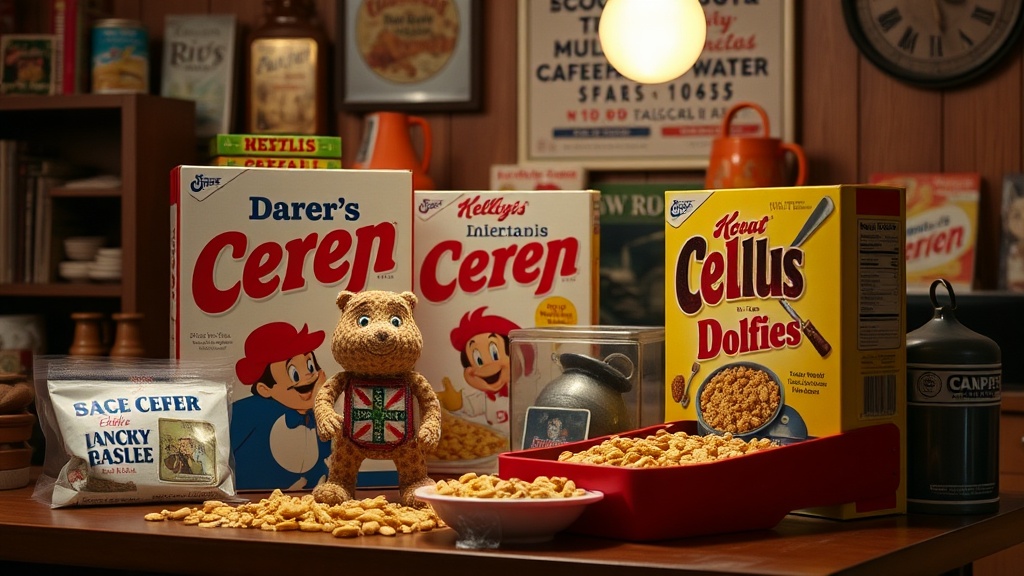
The Golden Age of Cereal Box Collectibles: A Nostalgic Journey

What makes cereal boxes from the 1950s-1970s so valuable to collectors?
The scarcity of surviving examples, combined with iconic pop culture crossovers and artistic packaging designs, drives prices into the thousands for mint-condition specimens. These weren't just breakfast containers—they were cultural artifacts that captured the zeitgeist of postwar America, from space-race obsessions to Saturday morning cartoons.
The period between 1950 and 1975 represents what most collectors call the "Golden Age" of cereal packaging. Before this era, boxes were utilitarian. After it, manufacturing shifted toward cheaper materials and standardized graphics. But during those twenty-five years, cereal companies invested heavily in illustration, premium offers, and licensed characters that turned ordinary cardboard into collectible art.
Kellogg's led the charge with their Tony the Tiger redesigns and the introduction of Pop-Tarts boxes featuring vibrant 1960s typography. General Mills countered with Count Chocula, Franken Berry, and Boo Berry—the monster cereals that debuted in 1971, 1971, and 1973 respectively. These weren't just cereals; they were gateways to imagination for an entire generation.
The artwork itself tells a story. Early boxes featured hand-painted illustrations that required serious artistic skill. The Cheerios boxes from the mid-1950s showcase pastoral American scenes with subtle color gradations that digital printing couldn't replicate today. Cap'n Crunch, introduced in 1963, brought nautical themes and a mascot designed by Jay Ward—the same studio behind Rocky and Bullwinkle.
Premium offers sealed the deal. Cereal companies included everything from Little Orphan Annie decoder rings (shipped in Ovaltine boxes, technically a drink mix but collected alongside cereal memorabilia) to Star Wars action figure mail-aways. The Battlestar Galactica tokens from Cheerios in 1978? Those still trade hands for $50-$200 depending on condition. The catch? Most kids opened these boxes with scissors, played with the toys, and tossed the packaging. That's why surviving boxes command premiums.
How do you identify and grade vintage cereal boxes?
Condition is everything—mint boxes can sell for ten to twenty times more than those with shelf wear, and authenticating original printing dates requires examining copyright lines, UPC codes, and nutritional panel layouts. The grading system used by serious collectors mirrors comic book standards, ranging from "Mint" (perfect corners, no fading, factory fresh) to "Poor" (tears, stains, structural compromise).
Here's the thing: most "vintage" boxes on eBay aren't what they claim. Reproductions flood the market. Spotting fakes requires examining the paper stock—authentic boxes from the 1960s used heavier cardboard with specific texture patterns. The printing process also differed; vintage offset printing leaves microscopic dot patterns visible under magnification, while modern digital reprints appear smooth.
Dating boxes involves several telltale markers:
- Pre-1965: No UPC codes, simpler nutritional information (if any), often featuring "specially packed for" regional distributor marks
- 1965-1974: Early UPC experiments, transition to full-color photography from illustration, introduction of "nutrition information" panels
- 1975-1985: Standardized UPC placement, mandatory nutrition labeling, glossier finishes becoming standard
Storage matters immensely. Boxes stored in attics suffer heat damage—colors fade, cardboard becomes brittle. Basements invite moisture and mold. The ideal environment mirrors archival standards: stable temperature (65-70°F), low humidity (30-40%), and protection from direct light. Acid-free boards and polyethylene bags provide the best protection without trapping harmful gases.
Worth noting: "Unopened" doesn't always mean valuable. A sealed box of 1970s Life cereal containing original cereal might actually be worth less than an empty, flattened box in better condition. The cereal itself degrades, attracts pests, and can stain the packaging from within. Most serious collectors prefer flattened, empty boxes that display better and avoid these complications.
Where can you find rare cereal boxes worth collecting?
Estate sales in the Midwest, specialized auction houses like Hake's Auctions, and dedicated Facebook collector groups offer the best opportunities—avoid flea markets where reproductions dominate and condition assessments prove difficult. The Smithsonian archives actually house significant cereal packaging collections, demonstrating the cultural importance of these everyday objects.
That said, the hunt requires patience. The rarest boxes—think Quisp first editions, original King Vitaman releases, or promotional Batman tie-ins from 1966—surface maybe a handful of times per year across all major auction platforms. When they do, competition drives prices skyward. A mint Quisp box from 1965 recently sold for $2,400 at Heritage Auctions. The same box with corner wear? Maybe $400.
Regional variations create collecting nicks. Hawaiian-market boxes featured different languages and artwork. Canadian releases often predated American versions by months. Test-market boxes—distributed in limited geographic areas before national rollout—carry premiums because of extreme scarcity. The Freakies cereal, a short-lived 1970s offering with bizarre monster characters, had several test-market variants that collectors now chase obsessively.
Building relationships with other collectors matters more than chasing individual pieces. The community—centered around forums, annual conventions like the National Cereal Festival in Battle Creek, Michigan, and Instagram accounts dedicated to packaging history—shares authentication knowledge, trade duplicates, and occasionally offers first refusal on estate collections. Trust builds over years, and the best deals happen privately between established collectors.
Price Comparison: Common vs. Rare Golden Age Boxes
| Cereal Box | Year | Common Condition (Good) | Mint Condition | Rarity Factor |
|---|---|---|---|---|
| Kellogg's Corn Flakes (standard) | 1960s | $15-$30 | $75-$150 | Widely produced |
| General Mills Count Chocula (first release) | 1971 | $200-$400 | $1,200-$2,500 | High demand, moderate survival |
| Quaker Quisp (original art) | 1965 | $400-$800 | $2,000-$4,000 | Discontinued, cult following |
| Post Freakies (test market) | 1972 | $300-$600 | $1,500-$3,000 | Limited distribution |
| Ralston Batman (promotional) | 1966 | $250-$500 | $1,000-$1,800 | License crossover appeal |
The market has shifted dramatically in the past decade. What started as a niche within ephemera collecting—lumped with vintage advertisements and trade cards—has developed into its own specialized field. Price guides specifically for cereal packaging now exist, though they lag behind market reality by months. Online auction results provide better real-time valuation data, though emotion sometimes overrides reason in bidding wars.
Condition sensitivity varies by rarity. For a common 1960s Rice Krispies box? You'll want museum-quality preservation to justify serious investment. But for a Grins & Smiles & Giggles & Laughs box from 1976—a cereal so obscure most people assume you're making it up when you mention it—any surviving example generates interest regardless of minor flaws.
Display considerations affect collecting strategy. Serious collectors face a dilemma: boxes take up significant space compared to coins or stamps. Flattened boxes store efficiently but lose dimensional impact. Some collectors build custom shelving that showcases the front panels while protecting edges. Others focus exclusively on "mini" boxes—the single-serving versions distributed in variety packs—which require fraction of the storage space and often feature identical artwork to full-size counterparts.
The Brooklyn collecting scene—where this publication is based—reflects broader trends but with local flavor. Estate sales in Bay Ridge and Dyker Heights occasionally surface collections from Italian and Irish families who saved promotional items across generations. The Key Food on Third Avenue once displayed vintage cereal boxes as decor; when they remodeled in 2019, several collectors acquired pieces that had hung undisturbed for thirty years.
Ultimately, cereal box collecting rewards those who appreciate the intersection of commercial art, childhood memory, and material culture. The cardboard itself—fragile, ephemeral, designed for disposal—somehow survived decades. Each box represents a small victory against entropy, a reminder of Saturday mornings past, and a piece of graphic design history that corporations spent millions creating. Whether you're drawn to the psychedelic Trix rabbit redesigns of 1970 or the stark minimalism of early Wheaties champions series, there's a corner of this hobby waiting.