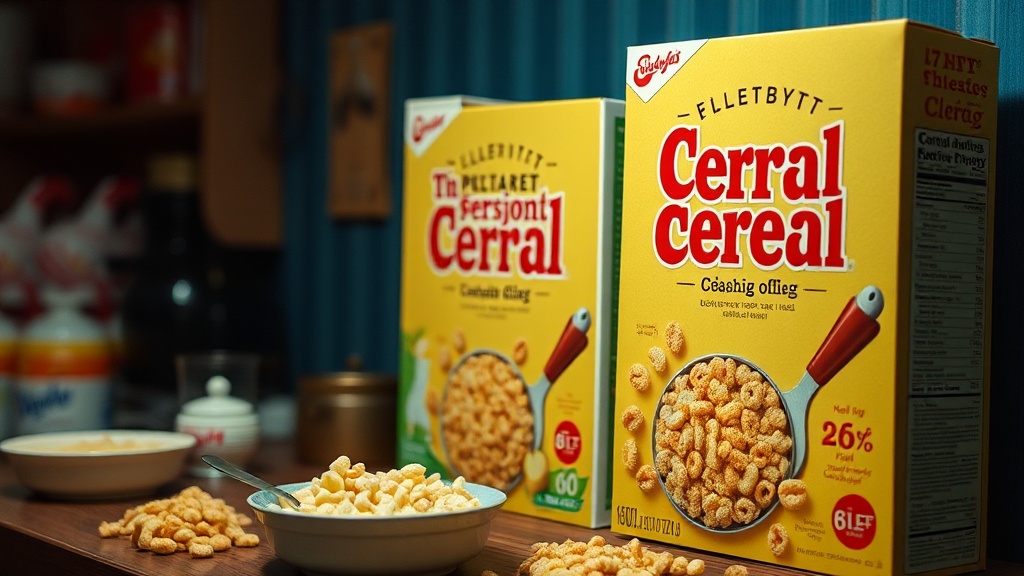
Vintage Cereal Boxes: A Collector's Guide to Breakfast Nostalgia

This guide covers everything needed to start or expand a vintage cereal box collection — from identifying valuable releases and understanding condition grading to proper storage techniques that protect paper integrity. Whether discovering dusty gems at estate sales or hunting for specific promotional boxes online, you'll learn how to evaluate worth, avoid common pitfalls, and build a collection that holds both sentimental and monetary value.
What Makes a Cereal Box Collectible?
Rarity drives value. Limited promotional runs, test market releases, and boxes tied to pop culture moments typically command premium prices. The 1985 General Mills Cereal Monsters series — featuring Count Chocula, Franken Berry, and Boo Berry in special holographic editions — remains highly sought after. Boxes commemorating movie releases, Olympic sponsorships, or celebrity endorsements often appreciate over time.
Condition matters enormously. Unlike coins or stamps, cereal boxes were designed to be discarded. Finding pristine examples from the 1970s or earlier requires patience (and deep pockets). A box with all flaps intact, no fading, and original contents untouched can fetch ten times more than a crushed, sun-bleached equivalent.
Here's the thing: cereal box collecting sits at an interesting intersection. It's ephemera — designed to be temporary — yet it captures advertising art, cultural moments, and childhood nostalgia in a tangible format. That combination attracts diverse collectors ranging from graphic design enthusiasts to pop culture historians.
How Much Are Vintage Cereal Boxes Worth?
Prices range from a few dollars for common 1990s boxes to over $1,000 for rare promotional pieces. Most collectors focus on boxes manufactured before 1990, though certain modern limited editions — like the 2017 Kellogg's Stranger Things collaboration — have already gained secondary market traction.
| Box Type | Condition | Estimated Value | Rarity Factor |
|---|---|---|---|
| 1950s-60s single-serve hotel boxes | Mint in wrap | $150-$400 | High — limited distribution |
| 1970s-80s standard family size | Excellent (minor wear) | $25-$75 | Moderate — available with effort |
| 1985 Cereal Monsters holographic | Near-mint (flaps intact) | $200-$500 | High — short production run |
| 1990s sports/promotional tie-ins | Good to very good | $10-$40 | Common — abundant supply |
| Modern limited editions (2010+) | Unopened, pristine | $15-$100 | Variable — depends on release |
The catch? Condition assessment requires honesty. That "excellent" box purchased online might arrive with hidden moisture damage or pest exposure. Always request detailed photos showing all six sides, interior flaps, and any promotional offers printed on the back panel.
Authentication presents another challenge. Counterfeit vintage boxes — particularly those tied to baseball cards or Disney promotions — circulate in the market. Legitimate sellers provide provenance documentation. When buying high-value pieces, factor third-party grading services like CGC (Certified Guaranty Company) into the budget. They've expanded beyond comic books to authenticate and grade vintage advertising materials including cereal boxes.
Where Can You Find Vintage Cereal Boxes for Sale?
Estate sales and flea markets remain goldmines for patient hunters. Brooklyn's own Grand Bazaar NYC occasionally features vendors specializing in paper ephemera and advertising collectibles. Thrift stores in older neighborhoods sometimes yield surprising finds — though condition varies wildly.
Online marketplaces dominate current trading. eBay lists thousands of vintage cereal boxes weekly, from common Post Raisin Bran varieties to elusive Quaker test market releases. Facebook collector groups offer community vetting — members flag suspicious listings and share pricing benchmarks. Specialty sites like Heritage Auctions handle high-end pieces with established provenance, though buyer premiums add 15-25% to hammer prices.
Worth noting: building relationships with sellers pays dividends. Dealers who specialize in advertising memorabilia often source cereal boxes as part of larger ephemera collections. Getting on their contact lists provides first look at fresh inventory before it hits public listings. Annual conventions — particularly the Ephemera Society of America's fair — attract serious collectors and dealers with inventory that rarely appears online.
Red Flags to Watch For
Reproduction boxes flood the market. Modern printing technology makes creating convincing fakes relatively simple. Warning signs include overly crisp colors on supposedly decades-old cardboard, incorrect font weights on promotional text, and missing copyright dates that should appear on vintage packaging.
Restored boxes — those reassembled from damaged pieces or touched up with markers — should be disclosed by sellers but often aren't. Hold boxes to light at angles to detect color matching inconsistencies. Smell matters too: genuine vintage cardboard carries distinct aging odors that are difficult to replicate artificially.
How Should You Store and Display a Cereal Box Collection?
Archival storage prevents the deterioration that destroys value. Standard cardboard boxes absorb acids and off-gas over time. Instead, use acid-free polyethylene bags sized appropriately for cereal box dimensions — typically 8x10 inches for single-serve hotel boxes, 12x18 inches for family sizes.
Light exposure kills colors. Fluorescent lighting fades reds and blues particularly aggressively. UV-filtering display cases protect showcased pieces, though they add significant cost. For budget-conscious collectors, rotating displayed items quarterly while storing the majority in dark, climate-controlled spaces provides reasonable protection.
Temperature and humidity control matters more than most beginners realize. Paper products expand and contract with environmental changes, stressing glued seams and causing warping. Ideal storage maintains 65-70°F with relative humidity between 35-45%. Basements and attics — tempting storage spaces — typically fail on both counts.
That said, don't let perfect become the enemy of good. A closet in a climate-controlled apartment beats the garage every time. The Society of American Archivists provides excellent resources on home preservation techniques applicable to cereal box collections.
Display Options That Protect
Acrylic display cases offer the best protection for valuable pieces, though at $30-60 per box, costs accumulate quickly. BCW Supplies and Ultra Pro manufacture archival-grade options specifically sized for cereal box collecting.
For larger collections, custom shelving with UV-filtering glass doors provides reasonable protection at lower per-box cost. LED lighting — which emits minimal UV radiation — allows safe illumination. Avoid halogen spots entirely; they generate heat and UV damage simultaneously.
Understanding Cereal Box Variants and Errors
Printing variations create collectible subsets that challenge completionists. Box backs frequently changed during production runs — promotional offers expired, nutritional information updated, licensed characters rotated. A 1978 Kellogg's Frosted Flakes box might exist with six distinct back panel designs from the same year.
Errors — misprints, upside-down panels, missing colors — occasionally escape quality control. These manufacturing mistakes generate premiums among specialized collectors. Documentation matters enormously here: an "error" that's actually production variation from different plants commands far less than genuine misprints verified through factory records.
Regional variations add complexity. Canadian boxes require bilingual English/French packaging. Test market releases in limited geographic areas — like 1983's Apple Cinnamon Cheerios debut in selected Northeast markets — create geographic scarcity that drives value.
Building a Focused Collection Strategy
Successful collectors define parameters early. Attempting to acquire "all vintage cereal boxes" leads to frustration and diluted quality. Better approaches include:
- Brand-specific: Focus on Quaker, Post, General Mills, or Kellogg's exclusively
- Era-based: Target the 1950s space-race promotional period or 1980s licensed character tie-ins
- Theme collections: Baseball promotions, Olympic sponsorships, movie tie-ins, or seasonal holiday editions
- Artist-specific: Boxes featuring specific illustrators like Norman Rockwell advertising commissions
Here's the thing: the most satisfying collections reflect personal connection. A collector who grew up in Chicago might focus on local brands like Malt-O-Meal regional distribution. Someone with graphic design background might prioritize boxes featuring specific typographic trends or illustration styles.
Documentation improves collection value beyond individual pieces. Photographing acquisitions, maintaining purchase records, and researching production history transforms accumulation into curated archive. Many serious collectors maintain spreadsheets tracking box dimensions, production codes, condition notes, and acquisition sources — data that proves invaluable when insurance appraisal becomes necessary.
"The box was always the selling point — the cereal was just the delivery system for the promise on the front panel." — Anonymous advertising executive, 1960s
Starting a vintage cereal box collection requires minimal initial investment but rewards deep knowledge and careful curation. The hunt itself provides satisfaction — estate sale mornings, online auction sniping, the thrill of finding a grail box in unexpected places. With proper storage, authentication vigilance, and focused acquisition strategy, a collection built from breakfast nostalgia becomes both personally meaningful and potentially valuable. Happy hunting.